
The number nobody puts in the brochure
Here is a fact about coastal ownership that listing pages never mention: most holiday homes stand empty most of the year. The couple who visit for six weeks in spring and four in autumn own the house for the other forty-two, and during those forty-two weeks the property goes on quietly spending their money.
None of this is a reason not to buy. The empty-year cost of a sensibly run property is modest, and knowing it in advance is what makes it modest. The expensive version is the one people discover bill by bill, clause by clause, across their first absent winter. So let us do the walk now, meter by meter, the way we do it with buyers before handover. At every stop there is a lever: something you can cut, and something worth deliberately keeping. The skill of running an empty house well is knowing which is which.
Electricity: what flows while nothing happens
Unplug everything and an empty house still consumes. The fridge you left running for the sake of the freezer drawer, the water heater somebody forgot to switch off, the standby lights of a television nobody is watching, the router blinking for no one. Individually trivial, collectively a steady trickle across forty-two weeks, and the water heater in particular is the classic silent spender when it guards a tank of hot water for an empty building.
The lever: cut almost everything, keep two things deliberately. Walk out on a switched-off water heater and an emptied, open, unplugged fridge, and the baseline falls to almost nothing. What earns its keep is a modest dehumidifier on a timer in the most closed room, an hour or two a day through the damp months, because the mould it prevents costs more than the electricity it uses. If your meter is the prepaid type, leave enough credit for that timer with margin, a meter that runs dry switches everything off, including the reason you left it running.
An empty house is not a paused house. Four bills keep ticking, two clauses keep watching, and the cheapest year is the one planned before handover, not discovered after it.
Water, and the garden that drinks it
The house itself barely drinks while you are away. The standing charges are small, and actual consumption at zero occupancy should be close to nothing, which is precisely why the water bill is the best leak detector you own: a non-trivial reading on an empty month means a running cistern, a weeping joint or an irrigation fault, and it deserves a phone call rather than a shrug.
The garden is the real water budget. A Mediterranean garden in July does not survive on goodwill, and irrigation is where empty-house water money actually goes.
The lever: close the main valve when you leave, after the washing machine taps, and the house side of the risk drops to zero. For the garden, a drip system on a timer, fed through its own tap you leave open, waters the plants and not the neighbourhood. And if the choice is between a thirsty lawn and gravel with native planting, the second one is the difference between a garden that costs money while you are away and one that quietly waits for you.
The site fee: the bill that never sleeps, and why that is fine
If the property sits in a complex, the service fee runs at full rate whether you are on the island or in another country, and new owners sometimes resent this more than any other line. Paying for a pool you are not swimming in has a particular flavour.
We would gently argue the opposite. For an absent owner, the site fee is the best money in the whole budget, because what it actually buys, beyond the pool, is presence: the gardener who notices the shutter hanging loose, the security round that notices the gate ajar, the maintained common areas that keep the whole site looking inhabited and therefore uninteresting to opportunists. An empty villa on its own plot has to buy that presence separately.
The lever: this one has no cut, the fee follows the site's schedule and arrears follow you, so the real lever is engagement. Pay it on time, stay reachable in the owners' chat, and know exactly what the fee includes, because every included service is one you do not need to arrange separately from abroad.
Insurance, and the clause that wakes when you leave
Here is the item almost every absent owner gets wrong, and it costs nothing to get right. Home insurance policies commonly contain an occupancy clause: leave the property empty beyond a stated number of consecutive days, often somewhere between thirty and ninety, and parts of the cover quietly change, water damage and theft being the classic restrictions. The premium keeps arriving. The cover you think you have and the cover you actually have stop being the same thing.
The lever: honesty, in both directions. Declare the property's real usage pattern when you take the policy out, holiday home, long absences, say it plainly, and ask in writing how long it may stand empty before conditions change and what the insurer requires during absences, water off, periodic inspections, whatever their list says. Then meet those conditions, and keep a note of each visit or management check, because that is what proof looks like if you ever need it. The wrong version of this story is discovered only at claim time, which is the most expensive moment in insurance to learn anything.
Pool, garden, and the quiet decay nobody meters
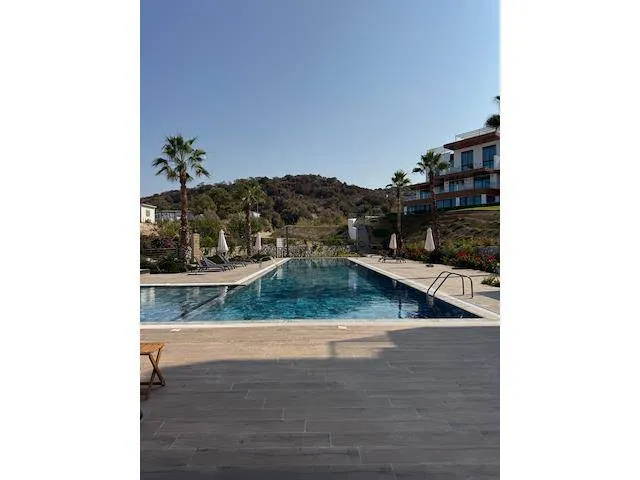
A private pool is the one item that genuinely cannot be switched off and forgotten. An untreated pool turns green with impressive speed in this climate, and recovering a green pool costs more than the maintenance that would have prevented it, sometimes much more if the neglect reaches pumps and liners. Budget for year-round care at reduced winter frequency, or, at purchase time, weigh honestly whether a complex pool someone else maintains fits your absence pattern better than a private one you must staff.
Then there is the decay no meter records. Rubber seals dry out, drains lose their water traps and let smells climb, a winter's damp writes on the walls of a sealed house, post fills the box and announces the absence, small roof issues become ceiling issues with nobody watching. None of this appears on a bill, all of it appears in the property's condition, and the antidote is boring and cheap: somebody opens the house once or twice a month, runs the taps, flushes, airs the rooms, glances at the ceilings and empties the post. A management visit schedule, a trusted neighbour, or a mix of both.
The lever: the visit rhythm is the lever. Everything in this section is cheap when it is caught within a month and expensive when it is found in April.
The year on one page
The ranges below are planning brackets for a typical two-bedroom property run sensibly while empty, not quotations, and every one of them moves with the site, the season and the property. Treat the shape as the useful part and confirm the specific numbers for any property you are considering.
| Cost | Empty-year planning range | Cut or keep |
|---|---|---|
| Electricity | Small if switched off properly, the heater and fridge decide it | Cut to a dehumidifier on a timer, keep prepaid credit topped |
| Water | Standing charges only, garden extra | Main valve closed, garden on its own timed drip line |
| Site service fee | Per the site's schedule, unchanged by absence | Keep, it is paid presence, know what it includes |
| Insurance | The premium is unchanged, the cover is not | Keep, declared honestly, absence conditions met and logged |
| Private pool care | Year-round at winter frequency | Keep reduced, a green pool costs more than a maintained one |
| Checks and small upkeep | One or two visits a month | Keep, it is the cheapest line and it protects all the others |
Before you buy, ask us for the honest empty-year numbers of any listing you are considering: the actual fee schedule, what the site includes, what the pool and garden genuinely need, and what a monthly check costs in that area. We would rather you budget the forty-two quiet weeks before handover than meet them one bill at a time afterwards.